Separate the objects before naming them
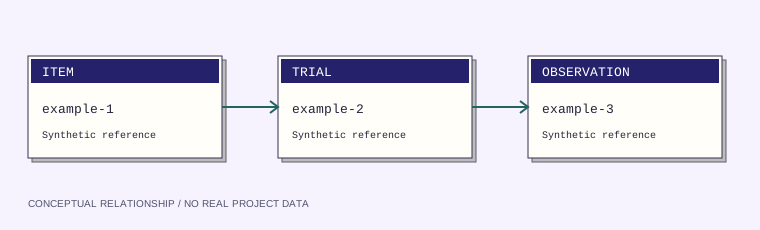
A trial, the item used in it, and the observation produced by it are not necessarily the same object. One item may appear in several trials. One trial may involve several items. Begin by describing those relationships in the language the team actually uses.
The model should identify which distinctions affect later work. If a record refers to a physical item, a design revision, or a prepared group, explain that difference. An identifier cannot solve ambiguity that the underlying workflow has not yet defined.
Distinguish a stable reference from a display name
People benefit from readable names, but names can change or be repeated. The specification should describe which reference identifies the object and which text helps a person recognize it. The interface may need to show both rather than make one overloaded label serve every purpose.
Describe what happens when an item is renamed, duplicated, combined, or no longer available for selection. A past record should not silently acquire a different meaning because a current label changed. The appropriate reference behavior depends on the activity and should be agreed explicitly.
Show the relationship where it is useful
A reader should be able to understand why two records are connected. A relationship may mean “used in,” “derived from,” “repeated under,” or “reviewed with.” A generic link icon does not explain those meanings on its own.
Review scenarios can examine how someone follows a reference and returns to the original task. Include unresolved references and incomplete information. The interface should describe what is missing rather than imply that an unidentified item has been confidently matched.
Prepare a model an implementation team can examine
Possible deliverables include an entity model, reference rules, naming guidance, and example navigation paths. The package should connect the structure to specific research activities and identify assumptions that domain owners need to confirm.
Database design, migration, duplicate resolution, permissions, and external system connections remain implementation work. A conceptual model can guide those decisions without claiming they are already solved. The purpose is a shared account of identity and relationships that the next team can test against real requirements.